I Wonder if Garbage Trucks Think: A Design Review
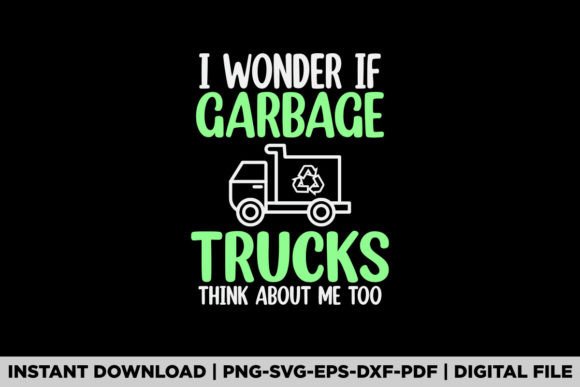
When you encounter an embroidery design with a title like I Wonder if Garbage Trucks Think, your first instinct might be to smile. That’s exactly what happened to me. It’s a quirky, playful, and oddly poetic sentiment wrapped in a simple phrase. As someone who stitches designs for clients, small shop products, and personal gifts daily, my job is to look beyond the initial chuckle and evaluate how this graphics concept translates into a real, threaded, tangible product.
The Mood and First Impression
This design immediately creates a lighthearted, thoughtful, and slightly whimsical mood. It’s not a loud, graphic statement; it’s a quiet conversation starter. The theme is universal in its simplicity—a childlike curiosity that resonates with adults. The layout, being text-based, presents a clean canvas for embroidery. The visual personality is friendly and unpretentious. It feels like it belongs on something cozy, something personal, or something meant to spark a moment of connection.
In my mind, I pictured it stitched onto a soft cotton sweatshirt for a dad, or perhaps on the corner of a linen pillow cover in a living room. It doesn’t scream for attention; it invites a closer look and a shared smile. For embroidery designers and makers, this means the design’s value lies in its emotional hook, not in intricate pictorial detail.
Real Projects: Where This Design Finds Its Home
Let’s walk through a real scenario. I was preparing a custom embroidered tote bag as a gift for a friend who has a young son obsessed with garbage trucks. This design was a perfect candidate. The text-based nature meant it could be scaled appropriately for the bag’s surface without losing clarity. On a medium-weight canvas tote, using a solid satin stitch for the letters, the result was crisp, readable, and charming. The recipient’s reaction was exactly what we hope for: delight and a sense of personal connection.
Beyond tote bags, this embroidery file naturally suits a range of projects. For custom apparel, it works beautifully on the left chest of a t-shirt or centered on a heavyweight sweatshirt. For baby embroidery, consider it on a little hoodie or a patch on a blanket—the sweet sentiment is ideal for nursery decor. As an embroidered patch, it could be applied to a backpack or a cap. In a craft business context, it’s a strong contender for kitchen towels, aprons, or simple pillow covers sold at a craft fair or in an Etsy shop. It’s a versatile digital embroidery file because its appeal is conceptual.
Considerations for Commercial and Gift Projects
When using this for small business merchandise or personalized gifts, think about your audience. The design is gender-neutral and generation-spanning, ideal for moms, dads, grandparents, or kids. This broad applicability increases its giftability. For an Etsy seller, listing a sweatshirt with this embroidery, a simple printable mockup showing the clean text on a dark fabric can communicate the handmade presentation effectively. The professionalism comes from crisp execution, not from the complexity of the design itself.
Stitching Practicalities and Where to Be Careful
Performance in real-life embroidery hinges on understanding the design’s strengths and limits. Being text-based, I Wonder if Garbage Trucks Think requires clarity in every stitch. On thin fabric or stretchy fabric like a lightweight t-shirt, you must use proper stabilizer to prevent puckering and ensure the letters remain sharp. For dark fabric, thread color contrast is paramount—a bright white or a pastel color might pop beautifully.
There are situations that demand extra attention. Small hoop sizes might compress the lettering, so scale carefully to maintain readability. On curved surfaces like caps, the longer text line might need adjustment to follow the curve without distortion. The potential for tiny lettering is a key point; if the design file has very fine details, test it first to ensure your machine’s satin stitch or running stitch can render it cleanly without fills becoming dense and hard. Avoid very textured fabrics like heavy fleece for a first attempt, as they can swallow detail.
For products destined for frequent washing, such as baby clothes or kitchen towels, a robust stitch density is important. Always test the stitch density on scrap fabric first to see how it wears. A design like this, when stitched well, builds customer trust because it looks intentionally crafted, not hastily applied.
Embroidery Designer Notes for a Smooth Project
Before you commit this to a final product, here’s my practical checklist. These steps save time and ensure quality, whether for a client project or your own craft business items.
- Test on scrap fabric first. Use the same material and weight as your final project. This reveals any issues with pull, density, or clarity.
- Check thread color contrast. Run a test in both light and dark fabric backgrounds. A design with this mood can work on both, but the thread palette must change.
- Review the design file in black and white. This helps you see the pure structure, ignoring color, and spot any overly dense areas or fragile connections.
- Confirm your hoop size. Ensure the design scales well within your available hoop for a clean, centered result.
- Inspect small details. If the file has any decorative accents or specific punctuation, verify they stitch out cleanly.
- Use proper stabilizer. Match it to your fabric type—this is non-negotiable for text-based designs.
- Confirm licensing. Before selling finished items or using it in commercial embroidery projects, verify the license terms of the digital product. This is a critical step for digital product sellers and creative entrepreneurs.
The Final Stitch: Value and Engagement
Ultimately, I Wonder if Garbage Trucks Think is a design asset whose value is amplified by skillful execution. Its stitching clarity directly impacts its visual appeal and the perceived value of the finished product. On a well-made sweatshirt or a crisp tote bag, it elevates the item from generic to thoughtful. It fosters buyer engagement because it’s relatable and conversation-starting.
For brand consistency, if your handmade shop or boutique has a friendly, quirky voice, this design aligns perfectly. It feels authentic. In a marketplace flooded with generic graphics, a well-embroidered piece with this sentiment stands out through its human touch and emotional resonance. My final judgment is this: with proper embroidery technique and thoughtful product pairing, this simple phrase becomes a powerful, charming, and commercially viable piece of thread art.